
Call: 08045801215
 Send Inquiry
 Send Inquiry
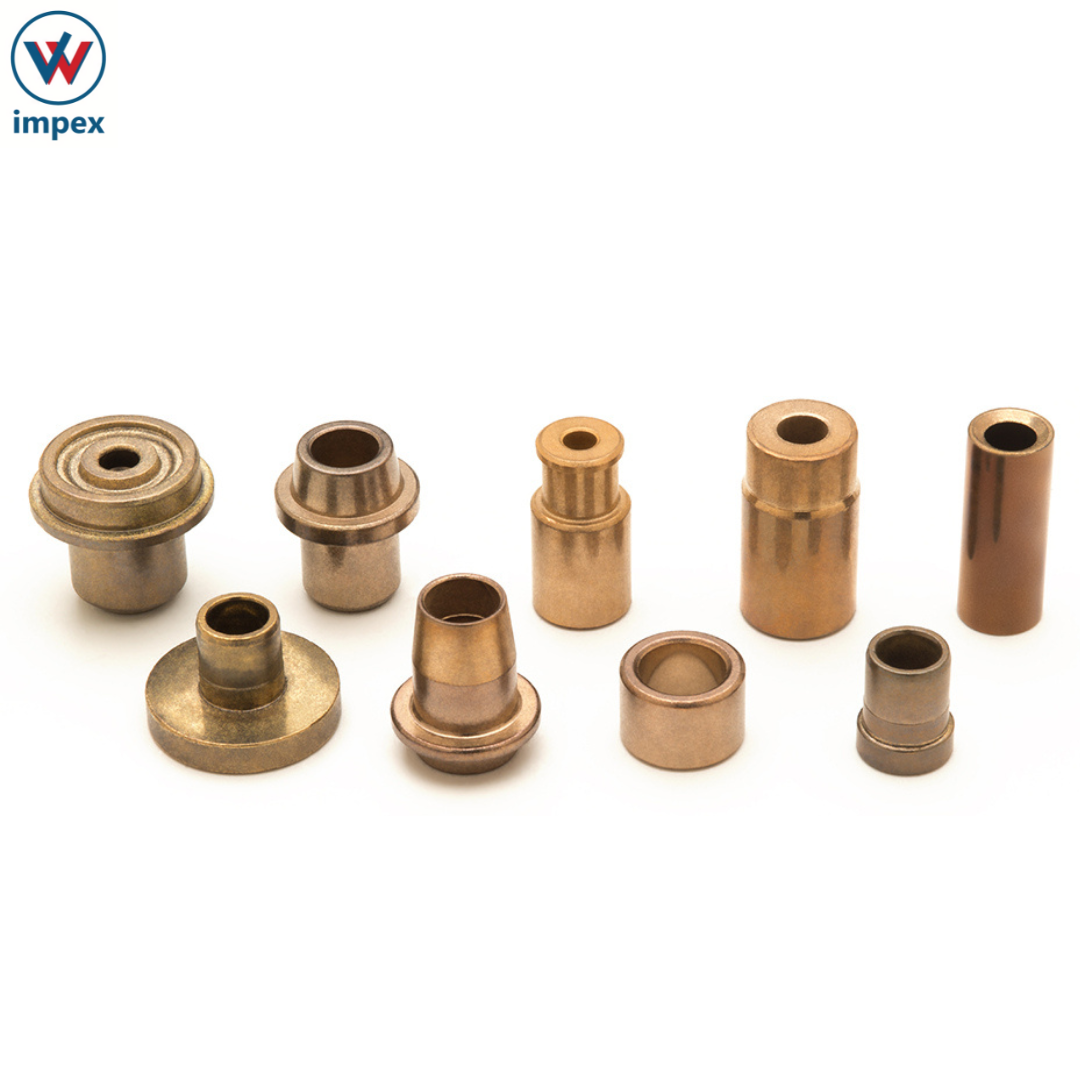
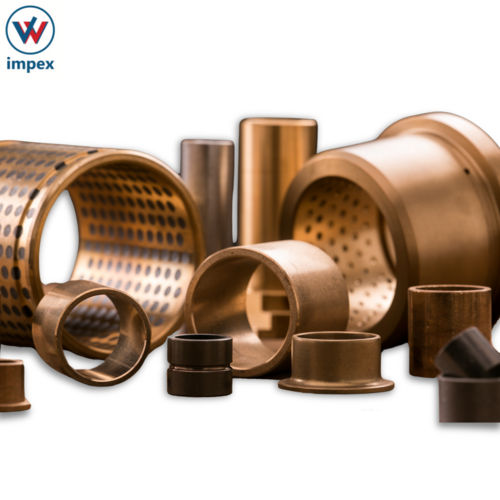
AMES Self-lubricating Sintered Bush Bearings
Price 500 INR/ Piece
MOQ : 1 Piece
AMES Self-lubricating Sintered Bush Bearings Specification
- Retainer
- Integrated (Self-Supporting)
- Inside Diameter
- 10 mm to 50 mm
- Lubrication Type
- Oiled / Self-Lubricating
- Thickness
- 1 mm to 4 mm
- Precision Rating
- ISO 9001 Standard
- Bearing Type
- Self-lubricating Sintered Bush Bearing
- Material
- Sintered Bronze / Iron
- Structure
- Cylindrical Bush
- Seals Type
- Open
- Number Of Rows
- Single Row
- Bore Size
- 10 mm to 50 mm (customization available)
- Outside Diameter
- 12 mm to 54 mm
- Limiting Speed
- Up to 6000 rpm
- Load Capacity
- Up to 5000 N (depending on size)
- Installation Type
- Press Fit
- Application
- Automotive, Industrial Machinery, Electric Motors, Home Appliances
- Shape
- Bush/Plain Sleeve
- Colour
- Copper/Bronze Tint
- Maintenance
- Maintenance-Free
- Corrosion Resistance
- High (due to self-lubrication)
- Customization
- Available on request
- Noise Level
- Low
- Operating Temperature Range
- -40°C to +200°C
About AMES Self-lubricating Sintered Bush Bearings
Founded in 1951, AMES is engaged in the manufacturing and sale of sintered metal components. AMES is one of the world leaders in the manufacture of sintered components in large series.
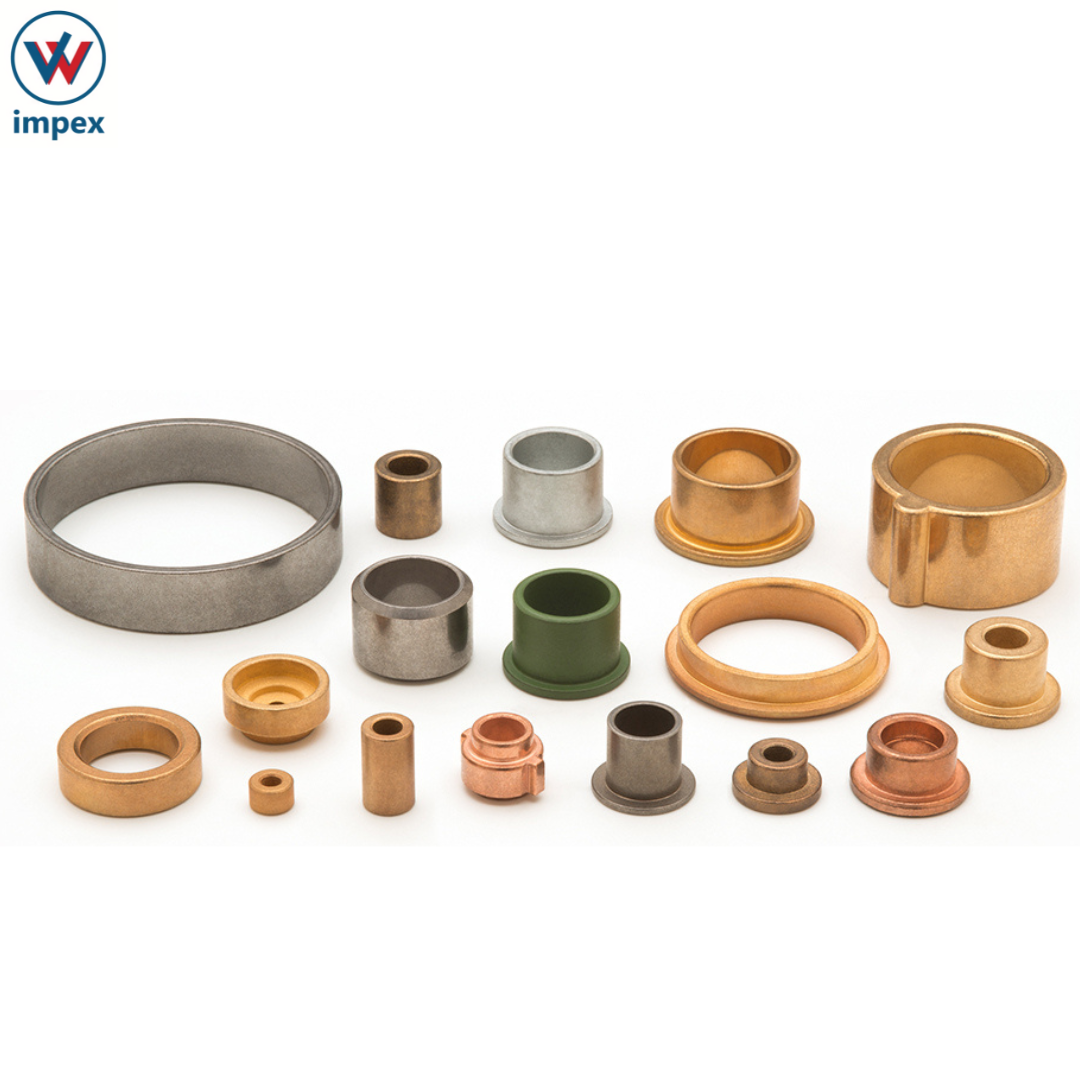
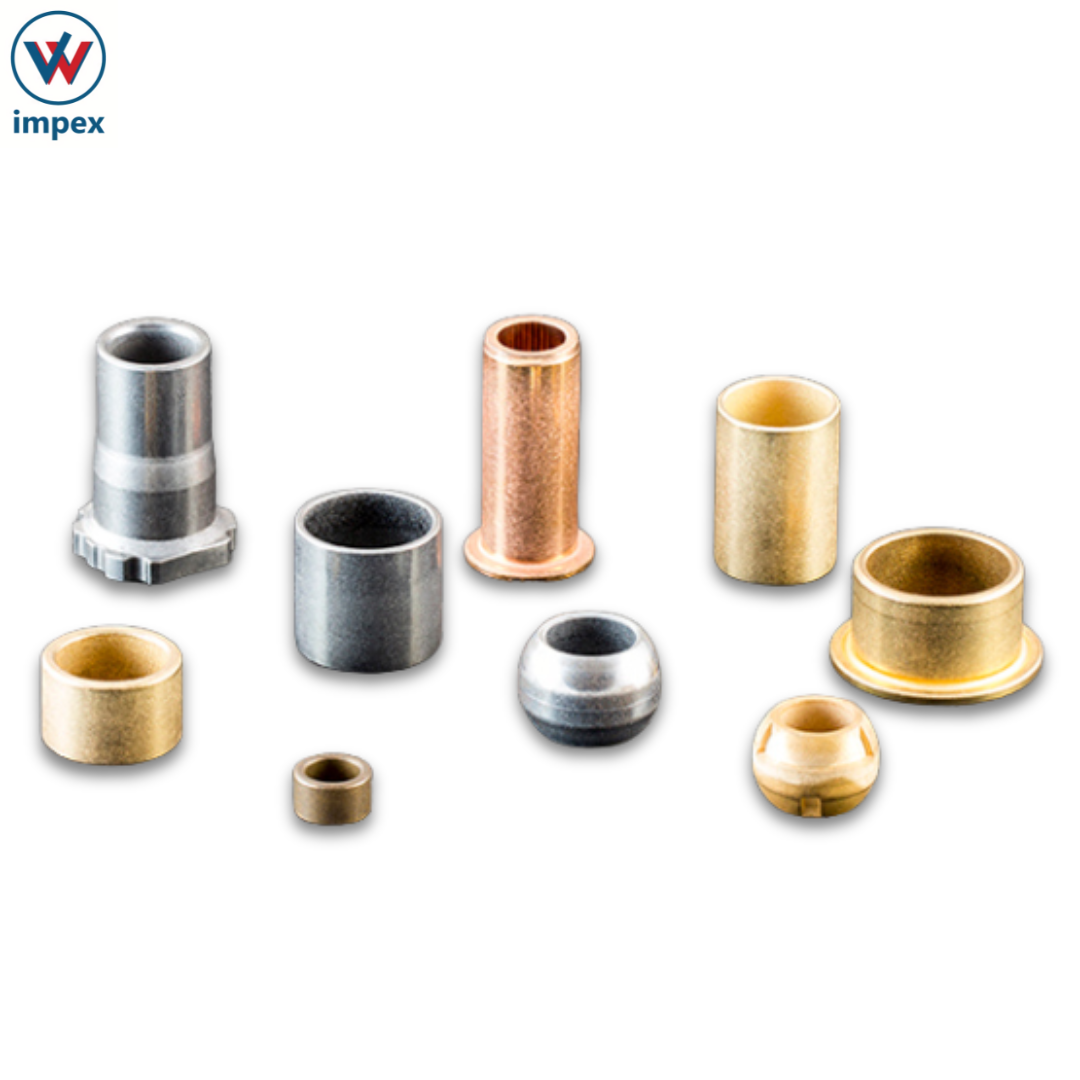
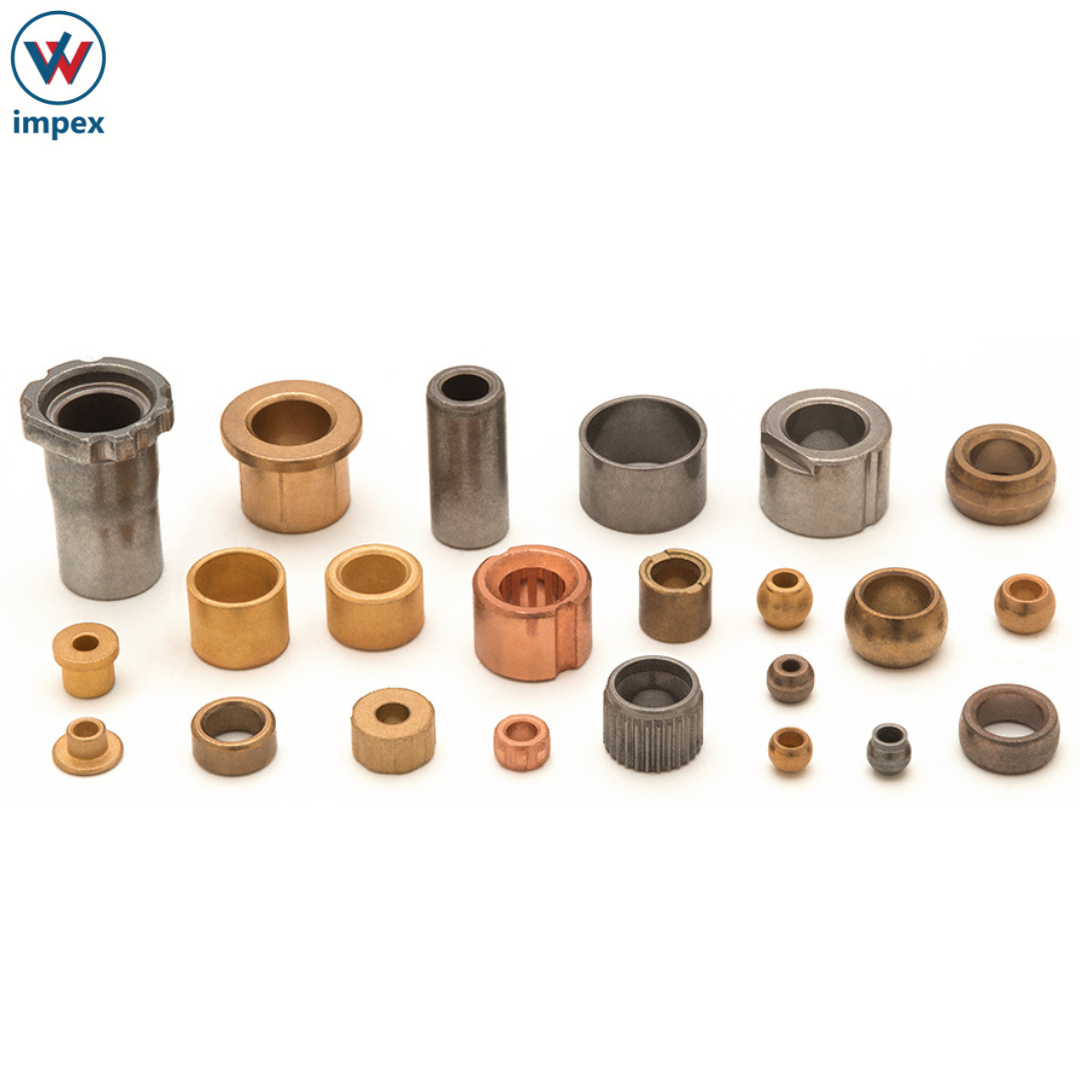
AMES is a world recognized manufacturer of self-lubricating sintered bearings by designing according to OEM drawings, especifically designed for a given equipment.
Most of AMES Solsona plant production corresponds to this OEM range, a plant specialised in manufacturing bearings. This plant is equipped with a R&D laboratory specialized in bearings, able to provide customized solutions to their customers, in terms of material choice, oil, shapes, tolerances, and assembly method.
MATERIALS
AMES manufactures according to all sintered material standards in the market.
Materials offered by AMES are:
- Bronze: This material has very low friction coefficient, typically around 0.02 at the usual working PVs. Bronce 90/10 is the most commonly used in the market.
AMES has developed Ames-A4 bronze, which has lower friction coefficient than bronze 90/10, i.e., 0.02. - Bronze Ames-E47. This bronze with special alloying has high corrosion resistance against impure fuels. Its use is for fuel pumps.
- Iron: This is the lowest cost material, but its friction coefficient is much higher than that of bronze, approximately 0.08. Typical compositions are plain Fe, Fe-C, Fe-Cu, and Fe-Cu-C.
- Iron-Based composite materials: Materials IBC-S and IBC-H, developed by AMES, have lower friction coefficient than any other iron in the market, approximately 0.04-0.06, at an equivalent cost. Fe-Bronze mixes have similar friction coefficient, but at a higher cost. IBC-Plus is a material specially developed to provide a low friction coefficient in linear movements.
- Ames-LFC: It is an iron-based material with double layer. Its behaviour at start-stop is better than bronze, although the performance at rated conditions is the same. Applications where the friction coefficient or the noise level are critical, are ideal for this material. Its price is between bronze and iron.
- Aluminium Ames-U4: It is suited to resist environment corrosion in applications where bronze and iron present corrosion. This material presents a friction behaviour value in-between bronze and iron, with a lower price than bronze designed version.
Several types of solid lubricants can be added to all these materials, in order to improve the performance under specific conditions.
OILS
The choice of the impregnating oil is critical for the bearing functionality.
Self-Lubricating Sintered Bearing
A self-lubricating sintered bearing is a metallic component with high porosity (20-25% in volume), impregnated in a lubricant oil. The oil contained in the porosity provides a constant lubrication between bearing and shaft, so the system does not need any additional external lubricant. Self-lubrication allows this type of sliding bearing to work under hydrodynamic conditions, resulting in a very low friction coefficient.
Sintered Bronze cylindrical bushings are all self-lubricating and maintenance-free. The sintered bronze bushings consist of a porous bronze matrix impregnated with lubricant. The permissible sliding velocity for sintered bronze bushings is very high, which makes the bushings suitable for rotating applications. These Sintered Bronze bushings are most suitable for applications with rotating movements and where the self-lubricating performance requirements are high.
Exceptional Temperature and Corrosion Resistance
Crafted for demanding environments, these bush bearings withstand temperatures from -40C to +200C. The self-lubricating feature not only reduces friction but also provides a high degree of corrosion resistance, making them suitable for outdoor and humid conditions.
Versatile Industrial Applications
These bearings are an excellent fit for various applications, including automotive assemblies, electric motors, industrial machinery, and home appliances. Their low-noise performance combined with maintenance-free operation provides significant advantages in both industrial and domestic environments.
Customization and Precision Engineering
AMES sintered bush bearings offer customization in shape, thickness, and bore size according to specific requirements. Adhering to ISO 9001 standards, each bearing is engineered for optimal performance, ensuring reliability and durability across numerous industries.
FAQ's of AMES Self-lubricating Sintered Bush Bearings:
Q: How should AMES Self-lubricating Sintered Bush Bearings be installed?
A: These bearings are designed for press-fit installation, making them straightforward to assemble into housings without the need for additional mounting hardware or lubrication systems.Q: What is the primary benefit of the self-lubricating feature in these bush bearings?
A: The self-lubricating property eliminates the need for regular lubrication maintenance while ensuring continuous, low-friction operation. This increases lifespan and reliability, even in high-load or high-speed scenarios.Q: Where are AMES Self-lubricating Sintered Bush Bearings commonly used?
A: They are widely used in automotive components, industrial machinery, electric motors, and household appliances due to their durability, low noise, and maintenance-free performance.Q: When is customization of bush bearing dimensions available?
A: Customization of dimensions-including bore size, thickness, and outside diameter-is available upon request, allowing users to match the bearing precisely to their unique application needs.Q: What process is employed to manufacture these sintered bush bearings?
A: The bearings are produced using powder metallurgy, where metal powders are compacted and sintered to achieve the desired shape and porosity, ensuring integrated lubrication and consistent mechanical properties.Q: How does the integrated self-lubrication improve corrosion resistance?
A: Self-lubricating bearings are saturated with oil, creating a protective layer that reduces moisture-related oxidation, thus increasing corrosion resistance over time without external lubrication.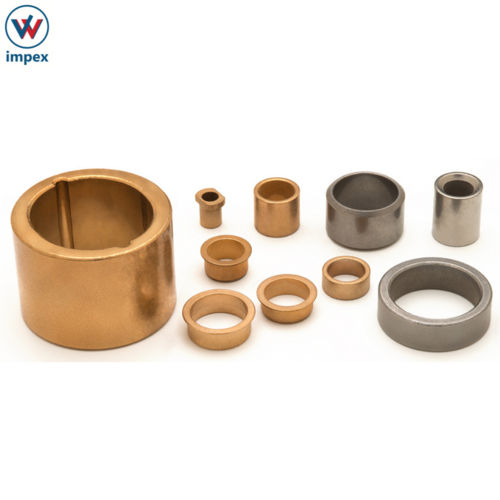
Tell us about your requirement

Price:
Quantity
Select Unit
- 50
- 100
- 200
- 250
- 500
- 1000+
Additional detail
Mobile number
Email

More Products in Bushings Category
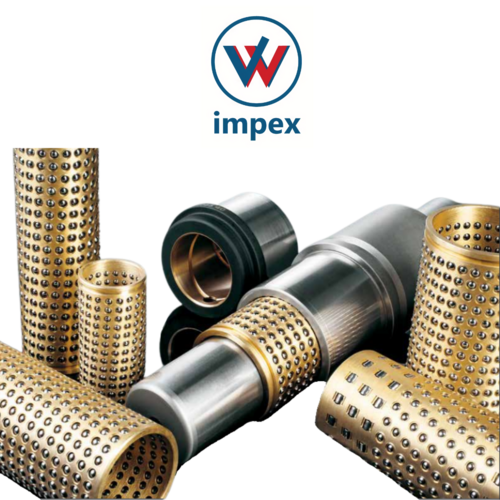
INTERCOM Ball Cage Guide Pillars and Bushes
Price 14000 INR / Piece
Minimum Order Quantity : 2 Pieces
Thickness : Standard/Customizable
Outside Diameter : 10 mm to 100 mm
Lubrication Type : Other, Grease/Oil Lubrication
Precision Rating : High Precision
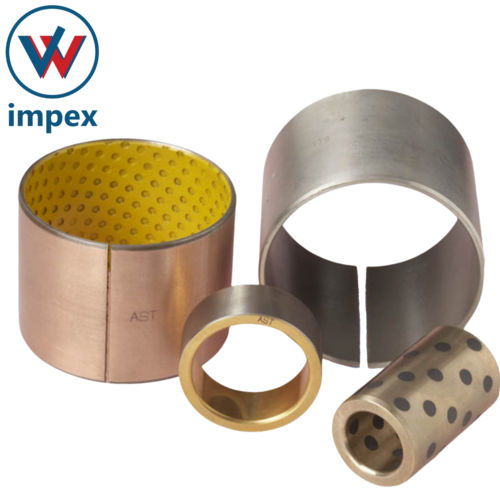
Self Lubricating Bushings
Price 500 INR / Piece
Minimum Order Quantity : 6 Pieces
Thickness : 1 mm to 40 mm
Outside Diameter : 12 mm to 210 mm
Lubrication Type : Other, Self Lubricating Solid Lubricant
Precision Rating : ISO Standard
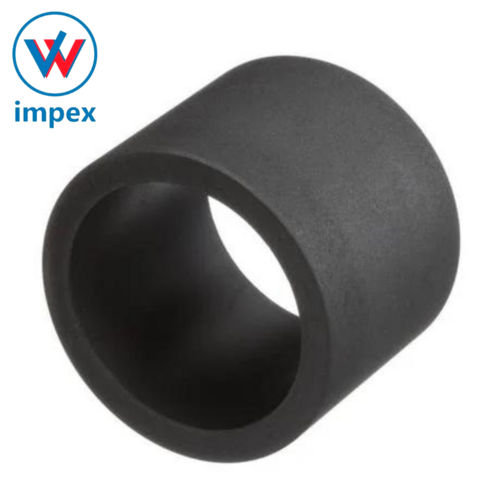
Babbitt Impregnated Graphite Carbon Bushing
Price 2,500 INR / Piece
Minimum Order Quantity : 1 Piece
Thickness : 3 mm to 30 mm
Outside Diameter : Customizable
Lubrication Type : Other, Selflubricating
Precision Rating : P0/P6
Oilite Bush
Price 1200 INR / Piece
Minimum Order Quantity : 2 Pieces
Thickness : 10 mm
Outside Diameter : 13 mm
Lubrication Type : Other, OilImpregnated
Precision Rating : ISO Tolerance Class

Contact Details
GST : 04AALPW0198A1ZR
- SCF 503, 2ND Floor Motor Market, Manimajra, Chandigarh - 160101, India
- Phone :08045801215
 Send Inquiry
Developed and Managed by Infocom Network Private Limited.
